
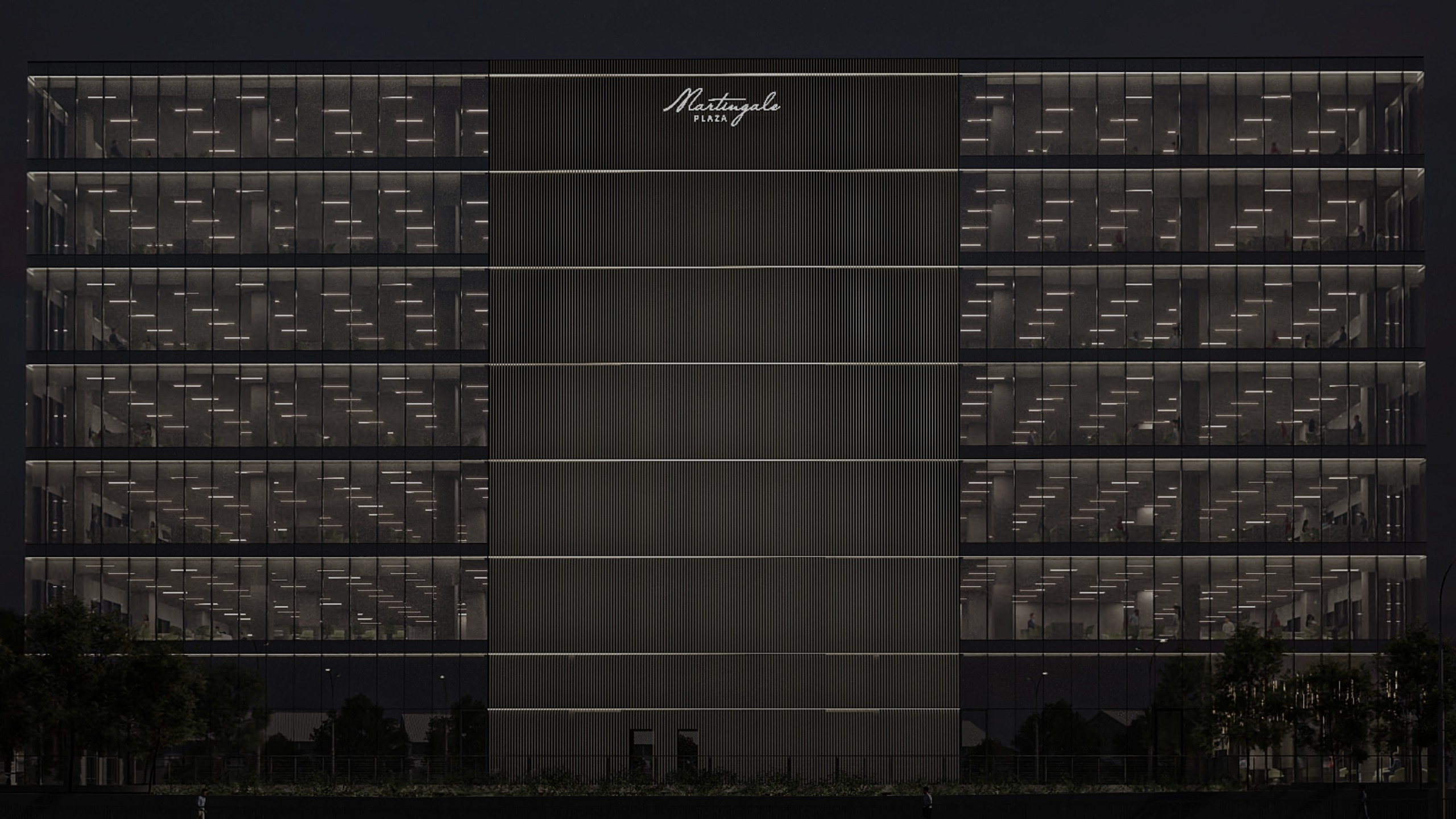
FROM A PROJECT AWARD TO DELIVERING WHAT WE PROMISE
By Rodolphe Asmar
Winning any building envelope project is always an important milestone moment. It means a client has placed confidence in our company and believes we have the expertise and capability to deliver what has been proposed. But at Alusteel, we have always seen the award of a project as the point where the real responsibility begins.
During the tender process, we spend a great deal of time learning exactly what it is that the project in question requires and then developing solutions that can actually achieve it. Once the contract is signed, those proposals have to be become a built reality. What works on paper has to work in the factory, and eventually, on site, often within a project that continues to develop around you.
This is particularly true in building envelope engineering, where so much of our work is connected to other parts of the building. A decision or change elsewhere in the project can have a direct impact on the façade, and issues that appear relatively small can become significant once manufacturing or installation is underway.
Making Sure What We Promise Can Be Delivered
One of the most important principles that guide our work is that the solution put forward at the beginning must be one we know we can deliver. There is little value in proposing something simply because it looks impressive during a tender. We need to understand how it will be engineered and whether it can be manufactured accurately.
We also need to know how it will actually be installed once our teams reach the site.
That requires a realistic understanding of our own capabilities, as well as the demands of the project. It is one of the reasons we have specialist teams in place who can cover every stage of the process, including engineering, manufacturing and site experts.
Projects Rarely Stand Still
Another reality of our industry is that projects often change and evolve during the project delivery phase. The building we eventually work on may not be exactly the same as the one presented when the tender was first issued. Designs can develop, programmes and time-lines can change, and coordination with other contractors can reveal issues that need to be resolved.
This is particularly likely to happen on the larger and more technically demanding or highly challenging developments, which just so happen to make up a large portion of Alusteel’s international portfolio. So, being flexible to change is something we have become very good at over time.
More than 35 years of experience helps us deal with these changes without losing sight of what was agreed at the outset. Sometimes the answer is relatively straightforward. At other times, our teams need to revisit an engineering detail or adapt a system to accommodate something that could not have been predicted earlier in the project. The important thing is having the knowledge and resources to deal with those situations when they arise.
Delivery Is a Collective Responsibility
It is one thing to win a contract, but you also need the specialists and skilled teams to be able to then deliver what you promised. At Alusteel, more than 2,000 people work across our various markets, with each team bringing focused expertise to specific parts of the process on any individual project. Engineers develop the technical solutions, factory teams turn those designs into accurately manufactured components, while site teams then have to bring everything together on the building itself.
And each stage works as a cog in the well-oiled machine of our overall operations, often depending on the work that came before it. If something is overlooked early in the process, the consequences are often felt much later. This is why communication between teams and a clear understanding of individual responsibilities matter so much – especially on complex projects.
What We Leave Behind
Over almost four decades in the industry, Alusteel has secured many important contracts and delivered many skyline defining projects. But even once we’ve completed the work on site, our responsibility still doesn’t end there. In fact, our involvement continues through aftercare, supporting our clients and the building long after the main scope of work has been delivered.
The relationships we establish through a project also continue for many years, and for me, that is an equally important part of what successful delivery means. Ultimately, we want the collaborations and partnerships we build to endure just as the buildings we contribute to do. Which is why we’ve become known as an industry leader and trusted partner in the markets we cover worldwide.


